

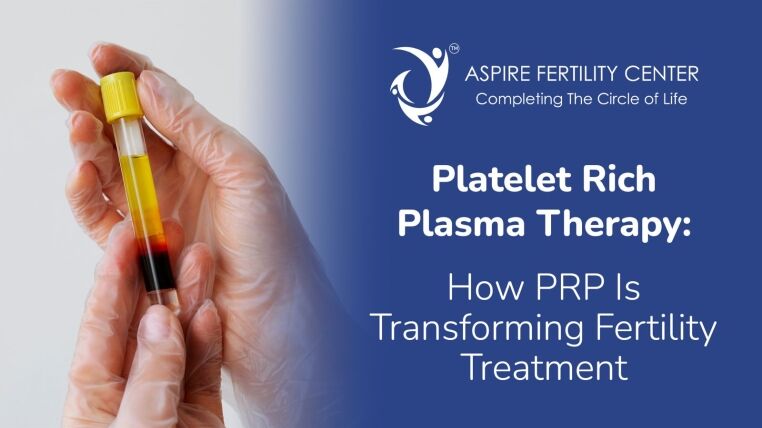
Platelet Rich Plasma Therapy is an emerging treatment in reproductive medicine that uses concentrated platelets from a patient’s own blood to address specific fertility conditions. At Aspire Fertility Center, we offer PRP therapy as a treatment option for patients with thin endometrium and certain male infertility issues.
PRP Therapy involves extracting blood, concentrating the platelets through centrifugation, and injecting the platelet-rich plasma into targeted reproductive tissues. The concentrated growth factors in platelets may help improve tissue function and cellular regeneration.
What Is Platelet Rich Plasma Therapy?
Understanding the Science Behind PRP
Platelet Rich Plasma Therapy uses a patient’s own blood to create a concentrated platelet solution. The process involves:
- Drawing 10-60 ml of blood from the patient
- Centrifuging the blood to separate platelets from other blood components
- Extracting the platelet-rich layer, which contains 3-5 times more platelets than normal blood
Platelets contain growth factors including platelet-derived growth factor (PDGF), transforming growth factor-beta (TGF-β), and vascular endothelial growth factor (VEGF). These proteins play roles in cell proliferation, tissue regeneration, and blood vessel formation.
How PRP Works in Fertility Treatment
In fertility applications, PRP is injected into specific reproductive tissues where the growth factors interact with local cells. The proposed mechanisms include:
- Increased blood flow to the targeted tissue
- Stimulation of cell proliferation
- Potential improvement in tissue thickness or quality
The treatment uses autologous blood (from the patient’s own body), which reduces the risk of immune rejection. However, the exact mechanisms by which PRP affects fertility outcomes are still being studied.
Applications of PRP Therapy in Fertility Treatment
Thin Endometrium Treatment
The endometrium is the uterine lining where embryo implantation occurs. An endometrial thickness of at least 7-8 mm is generally considered necessary for successful implantation, though optimal thickness may be 8-12 mm.
Thin endometrium (less than 7 mm) can reduce implantation rates. Causes include:
- Previous uterine surgery or procedures
- Hormonal imbalances
- Inadequate blood flow to the uterus
- Chronic endometritis
PRP therapy for thin endometrium involves injecting platelet-rich plasma into the uterine cavity or subendometrial layer. The procedure is typically performed during the proliferative phase of the menstrual cycle. Studies have reported endometrial thickness improvements of 1-3 mm in some patients, though individual results vary.
Male Infertility Solutions
Male factor contributes to approximately 40-50% of infertility cases. Common issues include:
- Low sperm count (oligospermia)
- Poor sperm motility (asthenozoospermia)
- Abnormal sperm morphology (teratozoospermia)
For male infertility, PRP is administered through intratesticular injection. The procedure is performed by specialists, including the best male infertility specialist in Bangalore at Aspire Fertility Center.
Research on PRP for male infertility is ongoing. Some studies have reported improvements in sperm parameters following treatment, while results remain variable. The therapy is typically considered for men with non-obstructive causes of low sperm production.
Ovarian Rejuvenation
Premature ovarian insufficiency (POI) and diminished ovarian reserve (DOR) are conditions where the ovaries lose normal function before age 40 or show reduced egg quantity and quality.
PRP therapy for ovarian function involves injecting platelet-rich plasma directly into the ovarian tissue through transvaginal ultrasound guidance. This is an experimental treatment with limited long-term data.
Some case reports and small studies have documented renewed menstrual cycles or follicular development in select patients with POI. However, this application remains investigational, and larger controlled studies are needed to establish efficacy and safety.
The PRP Therapy Procedure at Aspire Fertility Center
Initial Consultation and Assessment
Before PRP Therapy, patients undergo evaluation to determine candidacy. This assessment includes:
- Complete medical history review
- Previous fertility treatment records
- Diagnostic tests (hormone levels, ultrasound, semen analysis if applicable)
- Discussion of potential risks and benefits
Aspire Fertility Center’s team includes specialists in both male and female reproductive health, including the best male infertility specialist in Bangalore, who evaluate whether PRP therapy is appropriate for your specific condition.
The Treatment Process
The PRP Therapy procedure typically takes 30-60 minutes and follows these steps:
1. Blood Collection: 10-60 ml of blood is drawn from the patient’s arm.
2. Platelet Concentration: The blood is centrifuged for 10-15 minutes at specific speeds to separate blood components. The platelet-rich layer is then extracted.
3. PRP Injection: The concentrated PRP is injected into the target area:
- For thin endometrium treatment: intrauterine or subendometrial injection
- For ovarian rejuvenation: intraovarian injection under ultrasound guidance
- For male infertility: intratesticular injection
The injection is performed under local anesthesia or conscious sedation, depending on the injection site and patient preference.
Recovery and Follow-up
Post-procedure recovery varies by injection site:
- Intrauterine PRP: Mild cramping for 24-48 hours, light spotting possible
- Intraovarian PRP: Pelvic discomfort for 1-3 days
- Intratesticular PRP: Scrotal swelling or discomfort for 2-5 days
Most patients resume normal activities within 1-2 days. Follow-up appointments are scheduled to monitor response through ultrasound, hormone testing, or semen analysis, depending on the treatment indication.
Characteristics of PRP Therapy
Autologous Treatment
PRP Therapy uses autologous blood (the patient’s own), which eliminates the risk of disease transmission or immune rejection. However, standard infection control procedures still apply during blood handling and injection.
Minimally Invasive Procedure
PRP administration requires only blood draw and injection. The procedure does not involve surgical incisions, though injection into certain tissues (ovaries, testes) requires ultrasound guidance and appropriate anesthesia.
Current Evidence
Research on PRP for fertility is ongoing. Published studies include small case series and pilot trials with variable outcomes. Larger randomized controlled trials are needed to establish standardized protocols and determine which patient populations benefit most from this treatment.
PRP Therapy at Aspire Fertility Center
Medical Team
Aspire Fertility Center is led by Dr. Ashwini G. B., Founder and Clinical Director, who brings specialized expertise in reproductive medicine and advanced fertility treatments. Dr. Ashwini and the team of fertility specialists at Aspire are trained in administering Platelet Rich Plasma Therapy for various fertility conditions.
Our facility includes the best male infertility specialist in Bangalore, along with physicians specializing in female reproductive endocrinology, ensuring comprehensive care for both male and female fertility issues.
Facilities and Equipment
Our center maintains equipment for PRP preparation including:
- Clinical centrifuges for platelet concentration
- Sterile processing protocols
- Ultrasound guidance systems for accurate injection placement
Treatment Planning
PRP therapy protocols at Aspire Fertility Center are individualized based on:
- Specific fertility diagnosis (including thin endometrium treatment, male factor, ovarian insufficiency)
- Previous treatment history
- Baseline test results
- Patient health status and preferences
Treatment plans may combine PRP with other fertility interventions such as hormonal therapy, IVF, or ICSI as clinically appropriate.
Conclusion
Platelet Rich Plasma Therapy is an emerging treatment option in reproductive medicine for specific fertility conditions including thin endometrium and certain cases of male infertility. The procedure uses concentrated platelets from a patient’s own blood to deliver growth factors to reproductive tissues.
Current evidence for PRP in fertility is based primarily on case reports and small studies. While some patients have shown improvement in endometrial thickness, sperm parameters, or ovarian function, outcomes vary considerably. Larger clinical trials are ongoing to better define which patients benefit most from this approach.
If you have been diagnosed with thin endometrium, male infertility, or diminished ovarian reserve and are interested in learning whether PRP Therapy may be appropriate for your situation, contact Aspire Fertility Center to schedule a consultation. Our specialists can review your medical history, explain the current evidence, and discuss whether this treatment fits your fertility plan.
Contact Aspire Fertility Center
Phone:
- 080-42121313
- 9620004610
- 9620006410
Email: info@aspirefertility.in
Our Centers:
HSR Layout
No 2, 19th Main, 4th Sector, HSR Layout, Bangalore 560102
Sarjapur-Marathahalli
4th Floor, Within NATUS Hospital, 20/13, Sarjapur – Marathahalli Rd, Carmelaram, Janatha Colony, Doddakannelli, Bengaluru, Karnataka 560035
Frequently Asked Questions
Q1: How effective is Platelet Rich Plasma Therapy for fertility treatment?
A1: The effectiveness of PRP therapy varies by indication and individual patient factors. For thin endometrium treatment, published studies report endometrial thickness increases of 1-3 mm in some patients, with pregnancy rates ranging from 10-40% in small trials. For male infertility, early research shows variable improvements in sperm parameters, but standardized protocols and large-scale studies are lacking. For ovarian rejuvenation, the evidence is limited to case reports. Individual outcomes depend on the underlying cause of infertility, baseline fertility status, and concurrent treatments. PRP is generally considered when conventional treatments have not succeeded.
Q2: Is PRP Therapy painful?
A2: Pain levels vary by injection site. Blood collection causes minimal discomfort similar to standard blood draws. For intrauterine PRP injection, patients may experience cramping similar to an IUI procedure. Intraovarian injection requires ultrasound guidance and is performed under conscious sedation to minimize discomfort. Intratesticular injection is performed with local anesthesia. Post-procedure discomfort is typically mild to moderate and resolves within 2-5 days. Aspire Fertility Center provides appropriate anesthesia and pain management based on the injection site and patient tolerance.
Q3: How many PRP Therapy sessions will I need?
A3: Treatment protocols vary by condition. For thin endometrium treatment, patients typically receive 1-2 intrauterine PRP injections performed during the proliferative phase of the cycle, followed by endometrial thickness assessment before embryo transfer. For male infertility, treatment usually involves 1-3 intratesticular injections at monthly intervals, with semen analysis performed 2-3 months after the final injection. For ovarian rejuvenation, patients often receive 1-2 intraovarian injections, though protocols are not standardized. Treatment plans at Aspire Fertility Center are determined based on initial response to therapy, baseline condition severity, and individual patient factors. Some patients may require additional sessions if initial response is inadequate.
Q4: Are there any side effects of Platelet Rich Plasma Therapy?
A4: Common side effects are usually mild and temporary, including injection site reactions such as swelling, bruising, or tenderness lasting 3-7 days. Intrauterine injection may cause cramping for 24-48 hours and light spotting or bleeding for 1-3 days. Intraovarian injection can result in pelvic discomfort for 1-3 days, while intratesticular injection may cause scrotal swelling for 2-5 days. Rare complications may include infection at the injection site, allergic reaction to anesthetic agents, or injury to surrounding tissues during injection. Because PRP uses autologous blood, allergic reactions to the PRP itself are uncommon. Aspire Fertility Center follows sterile technique protocols and monitors patients post-procedure to minimize complication risks.
Q5: How soon can I expect to see results from PRP Therapy?
A5: Expected timelines vary by treatment type. For thin endometrium treatment, endometrial thickness is reassessed via ultrasound 7-14 days after PRP injection. If performed in the cycle before embryo transfer, response is evaluated in that same cycle, and measurable changes in thickness may be seen within one menstrual cycle. For male infertility, spermatogenesis (sperm production) takes approximately 72 days, so semen analysis is typically performed 2-3 months after the final PRP injection. Changes in sperm count, motility, or morphology may take 8-12 weeks to manifest. For ovarian rejuvenation, hormonal markers (AMH, FSH) may be checked 1-3 months post-treatment, and resumption of menstrual cycles or follicular development, if it occurs, may take 2-6 months. Follow-up schedules are tailored to each patient’s treatment protocol and fertility timeline.


